Once fixed fittings have been installed at the first job site, temporary work lights are taken from the first job site and installed at the second.
The most crucial action to take before beginning any endeavor is to have a strategy. The key to making sure that your workplace is correctly illuminated, guaranteeing worker safety and project productivity, is to have a clear plan for your impermanent illumination. There should be a lighting plan in place for building jobs, and the majority of lighting plans will have three stages. Level 1 lighting designates lamps for work activities, such as the places where the workers will be working or moving around. When working with big items or jobs requiring little precision, level one illumination is recommended. This typically indicates that there are five foot candles of steady light present.
To create a secure atmosphere for employees who may be running building machinery with a modest degree of precision, level two lighting specifies illumination for regions around the equipment. 10 foot candles of continuous light can typically be produced with this kind of illumination. Finally, level three illumination is best suited for jobs that demand extreme precision and difficulty. These lamps typically enable 20 foot candles of continuous illumination.
The Four Major Work Lamp Varieties
For labor zones, there are generally four different illumination kinds. These include luminaires placed on impermanent light posts, inflatable illumination, movable light plant structures, and tools with factory-installed lights. A number of luminaires are attached to a limb that supports the lights at various mounting heights in portable light plant structures. A portable generator can be connected to the limb, giving you more freedom when illuminating your project. A large area of uniformly dispersed, typically glare-free light is provided by balloon lights when placed on movable light poles, which creates much better working environments. Usually made by a lighting design expert, lights that are installed on impermanent posts can be hard connected to an electrical system. Temporary illumination is required because the factory-installed lighting on tools frequently is insufficient for more work conditions.
Interim lighting should be installed in the most practical areas, and nowadays, the majority of light fittings include software that can help you choose the lighting configuration that would be most suitable for your workplace. The site should be evaluated after your illumination strategy has been created and put into action. Workers should walk around the areas they will be working in during testing to make sure they are properly illuminated. Testing should also involve outdoor views of the illumination in the work zone. Also watch out for over-lighting a place. A glow caused by too much light in your workplace can be hazardous.
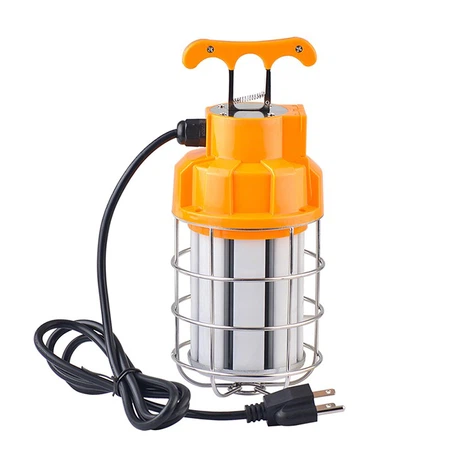
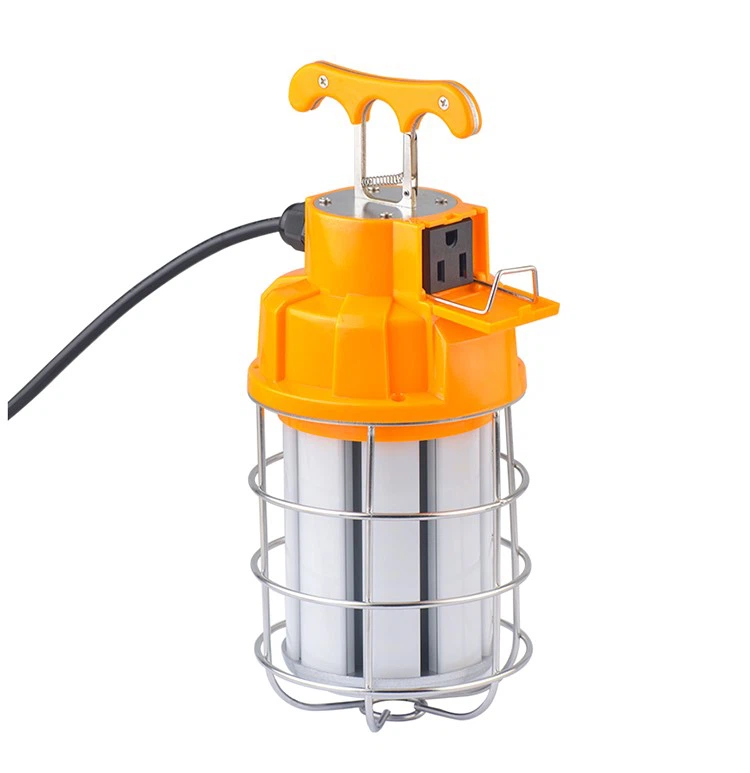
In order to better protect employees from accidents, many portable LED workplace lights are made with all electrical components housed inside a confined room. These lamps have a variety of beam dispersion choices, which enable them to maintain a calm temperature while illuminating sizable regions. Work light versions can also be combined with adhesive attachments or a movable mounting package, allowing for flexible placement in constrained workplaces. Workspace mobility is made possible by the lengthy cables and portability of portable work lamps, which can also be moved around and installed again.
LED light chains can be customized to suit your project and are also available for uses in a variety of settings. All receptacles, connections, and terminals are made for increased longevity, and string light sockets are positioned 10 feet apart. The extremely impact-resistant substance also facilitates simple stowage and transit when not in use.
Events like performances and fairs can also use temporary illumination devices. To provide the highest level of safety and security for these activities, these kinds of lamps are required. These temporary light installations are frequently joined by temporary power delivery systems to prevent people from electrical shock because plug-ins and disconnects tend to occur more frequently at concerts and events.
Reasons LED Crop Lights Work
Using LED maize lights is one fast method to replace inefficient exterior illumination with energy-efficient LEDs. These lights are fashioned like bulbs and contain hundreds of individual LEDs that are attached to a heat sink. Because of how the LEDs are attached to the central part, which mimics corn on the stalk, these lights are also known as maize lamps.
These are a common option for upgrading existing light fittings because they are typically more than 75% more effective than metal halide lights. Highway illumination, street lighting, and curb lighting can all be improved with corn lanterns. They are quite simple to install and can be used in the majority of screw-in holes. Make sure the lamp's measurements suit the fixture because maize cob lights are bigger than traditional lamps. It needs to have a few centimeters of space around it.
Since the metal construction of good maize lights has a large amount of surface area that can let the heat escape, they should be able to chill themselves. The area around corn lights that are burning hot needs to be adequately aired. Make sure to purchase these lamps that are designed especially for the climate and working environment when buying them for your endeavor.
Since LEDs consume less power than other types of lamps and lower current, using them for interim project requirements is optimal. This is crucial for people who use impermanent work site illumination. Long lines of impermanent work lights, like those used during tunnel building, are frequently used. Due to the impedance to the, there may be a significant power loss over these lengthy lines. Most building teams will use heavier gauge lower impedance wire, which has a tendency to have a lower current pull, to make up for this voltage loss. The final consumer will save money because a smaller diameter wire can be used due to the reduced current consumption. Another significant advantage is that workers can use much longer lines than were previously possible thanks to LED illumination.
Less electricity also enables running LEDs at reduced voltage, allowing project managers to use high light outputs despite their need for low voltage. Long-time low voltage users have had access to incandescent lamps, but because of the low voltages, their excessive power usage frequently places the project at a serious deficit.
High current at low volts results in high power, and high voltage dips over lengthy wire lengths are caused by high current. Low voltage users in the past had to make up for this by using fewer lights or shorter lines than those who could use higher voltage goods. Now that LEDs can produce light intensities and string lengths that are comparable with their high voltage incandescent counterparts, low voltage users have the option of choosing an interim illumination solution.
Less power also translates into fewer kilowatt hours being added to your account. A normal 100-watt LED light bulb uses only 15 watts, compared to the 100 watts used by a 100-watt conventional light bulb. The end consumer saves $0.70 per hour using an LED for a 1000-foot line with lights every ten feet and an energy expense of $0.07 per kilowatt hour. Curiously, because many light bulbs are manufactured with hazardous and possibly poisonous materials, like mercury, they do not comply with the Limitation of Hazardous Substances Directive. The guideline is frequently followed by LED lamps, which keeps your project legal.
Using LED lighting in your impermanent or building projects has additional benefits beyond energy savings and safety enhancements. For example, using these light fittings can help you save money on taxes. Since it is now clear that LEDs are much better for the environment than conventional lights, many states are starting to impose regulations that may ultimately make other high-wattage illumination illegal. While individual states offer financial benefits for citizens and companies that transition to LED lights, the federal government is also presently trying to phase out incandescent and halogen lights in the United States.
Anyone who wants to finish their job on schedule, within their intended budget, and without any problems must give top precedence to having a well-lit workplace. In addition to being a much more affordable choice, using LED portable lights for construction, mining, renter improvement, or renovation is a much better way to make sure that your employees finish the job in a well-lit, accident-free environment. These LED lights will show to be dependable, secure, and robust regardless of the undertaking because they use new technology and less energy. Choosing LED lighting as your impermanent work site illumination source has many benefits. Staying up with trends can help your construction location complete the task effectively and securely. As always, we advise consulting a lighting professional for all of your lighting requirements.
Benwei product